How to write an estimate customers say yes to
What to put in a contractor estimate so homeowners understand it and accept it: clear line items, plain wording, photos, options, the deposit, an end date, and sending it the same day.
By the SmoothFlo team · Updated November 8, 2026 · 8 min read
Two contractors look at the same job and quote within a few hundred dollars of each other. One gets the job. Usually it isn't the price that decides it. It's which quote the homeowner understood, trusted, and could say yes to without a phone call.
Here's what a winning estimate has in it, in the order the customer reads it.
1. Send it the same day
The best estimate in the world loses to a decent one that arrived first. Aim to send the quote the same day as the visit, while the customer still remembers you. If you can, build it on site and send it before you leave the driveway.
2. Start with a short, personal line
One or two sentences that show you listened: "Thanks for walking me through the house, Grace. Below is what we talked about for the living and dining room, with a couple of extras you mentioned." Skip the company history. That can go further down.
3. Break the price into lines they can follow
A single total for the whole job invites the question "Why so much?". Lines answer it before it's asked. Group the job the way the customer thinks about it, by room, area or stage, and show what each part costs.
- Name each line in plain words: "Walls, 2 coats", not "INT-WALL-2C".
- Under each line, list what's included in a few bullets: protecting floors and furniture, patching, priming, the paint you'll use, cleanup.
- Say what's not included when it could cause a surprise: moving heavy furniture, repairs found once work starts.
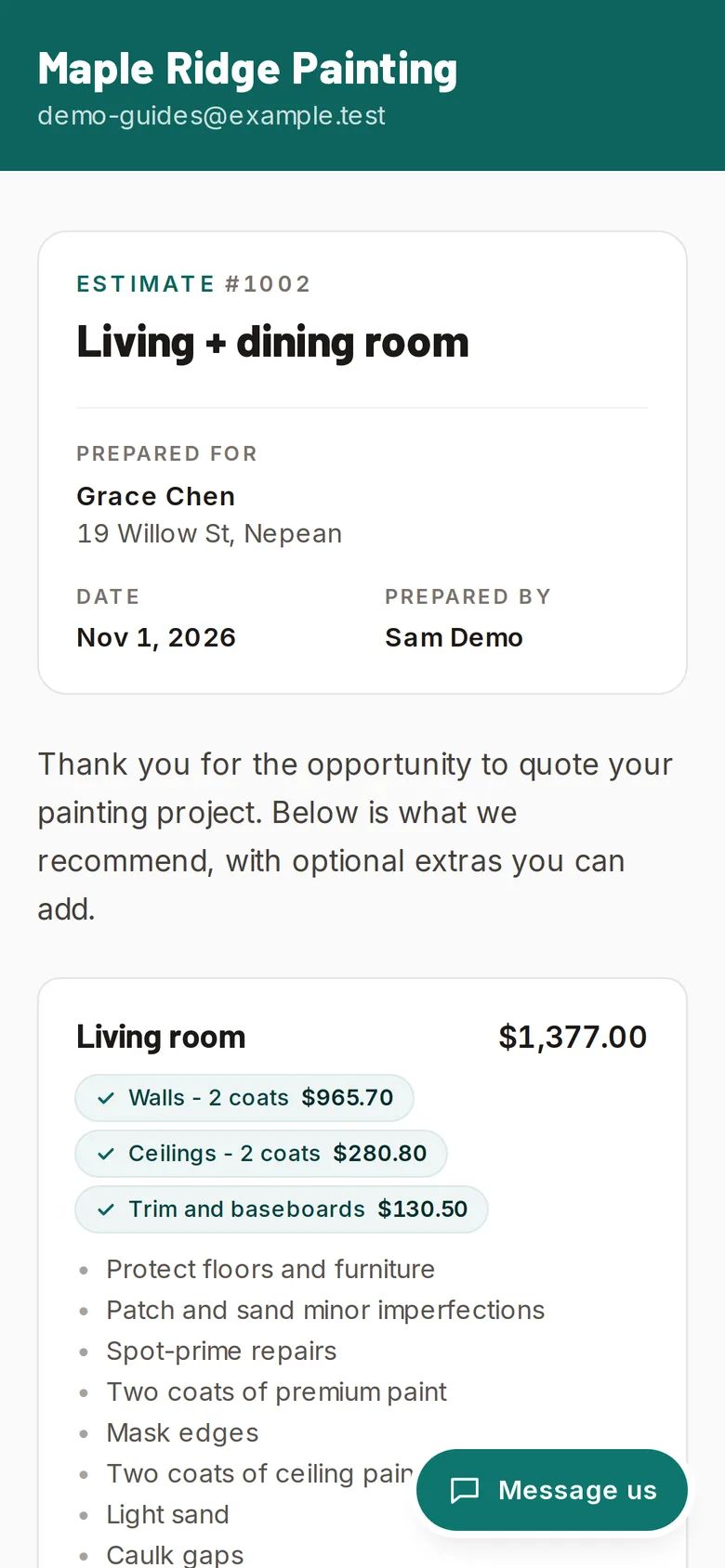
4. Offer options, not just one price
Keep the main quote lean, then add optional extras the customer can tick: the closet, the stairwell, a premium paint, a longer warranty. People like choosing. Many add one or two extras on their own, and a customer who's choosing between options isn't deciding between you and another company.
5. Show photos
Photos you took on the visit make the quote feel like it's about their house, not a template. A photo of the water stain you'll prime, the rotten board you'll replace, or the colour sample they liked removes a lot of back-and-forth. Add a short note under each one.
6. Make the money easy to read
- Price before tax, the tax, and the total on separate lines.
- Any discount on its own line with its reason ("Fall promo, 5% off"), so the full price is still visible. See when to offer a discount.
- The deposit: how much, and when it's due. See how much of a deposit to take.
- How long the price is good for. "Valid for 30 days" protects you from rising costs and gives the customer a reason to decide.
7. Build trust further down
Below the price, add what makes you safe to hire: two or three short reviews from past customers, your warranty in one or two sentences, and a line about who you are. Keep it short. They're reading it to feel sure, not to learn your history.
8. Make yes one tap
If accepting means printing, signing, scanning and emailing, some customers will put it off and forget. Let them accept and sign on their phone, pay the deposit, and ask a question from the same page. The easier yes is, the more often you get it.
Then follow up
Most accepted quotes come after a follow-up or two, not straight away. A friendly check-in the next day and again a few days later wins more jobs than any discount. See how to follow up on an estimate without being pushy.
Estimates in SmoothFlo
- Build the quote room by room or from your price book, with your own wording on every line, or add a whole package in one tap.
- Add photos from the visit with a note under each, and choose their order.
- Optional extras the customer ticks themselves, and their total updates as they go.
- Your reviews, warranty and about-us on every quote, set once in Settings.
- The customer accepts and signs on their phone, sees the deposit and how to pay, and can message you from the same page.
- You see when they open it and for how long, so you know when to follow up.
Checklist
- 1Sent the same day.
- 2A short personal intro.
- 3Lines grouped the way the customer thinks, each with what's included.
- 4A few optional extras.
- 5Photos with notes.
- 6Price before tax, tax, total, any discount with its reason, the deposit, and how long the price is valid.
- 7Reviews and warranty.
- 8Accept, sign and pay from a phone.
Questions contractors ask
What should a contractor estimate include?
Your company details and the customer's, a short intro, the work broken into clear lines with what each includes, any optional extras, photos, the price before tax, tax and total, the deposit, how long the price is valid, and an easy way to accept.
Should an estimate show line prices or just a total?
Line prices usually win more jobs, because the customer can see where the money goes. If you'd rather show only a total, still list what's included in each part of the job.
How long should an estimate be valid?
30 days is common. It protects you from rising material costs and gives the customer a reason to decide.
Built for the trades
Do all of this in one place
SmoothFlo handles leads, door knocking, room-by-room estimates, follow-ups, invoices and job profit for contractors. The screenshots in this guide come from it.