How to price an interior painting job, room by room
A step-by-step way for painting contractors to measure rooms, price walls, ceilings and trim, work out labour hours and paint, and check the profit before the quote goes out.
By the SmoothFlo team · Updated November 7, 2026 · 9 min read
Most painting quotes go wrong in one of two ways. Either the price is a guess made in the driveway, or it takes all evening at the kitchen table. Pricing room by room solves both. You measure each room once and price every surface from rates you set ahead of time. The same measurements give you the hours and the paint.
Below is the method, using a living room, kitchen and hallway in an Ottawa house as the example. Treat the numbers as a starting point. Your rates depend on your market, your crew and the kind of work you want more of.
1. Measure the room, not every wall
You need four things per room: length, width, ceiling height, and a count of doors and windows. Everything else is worked out from those.
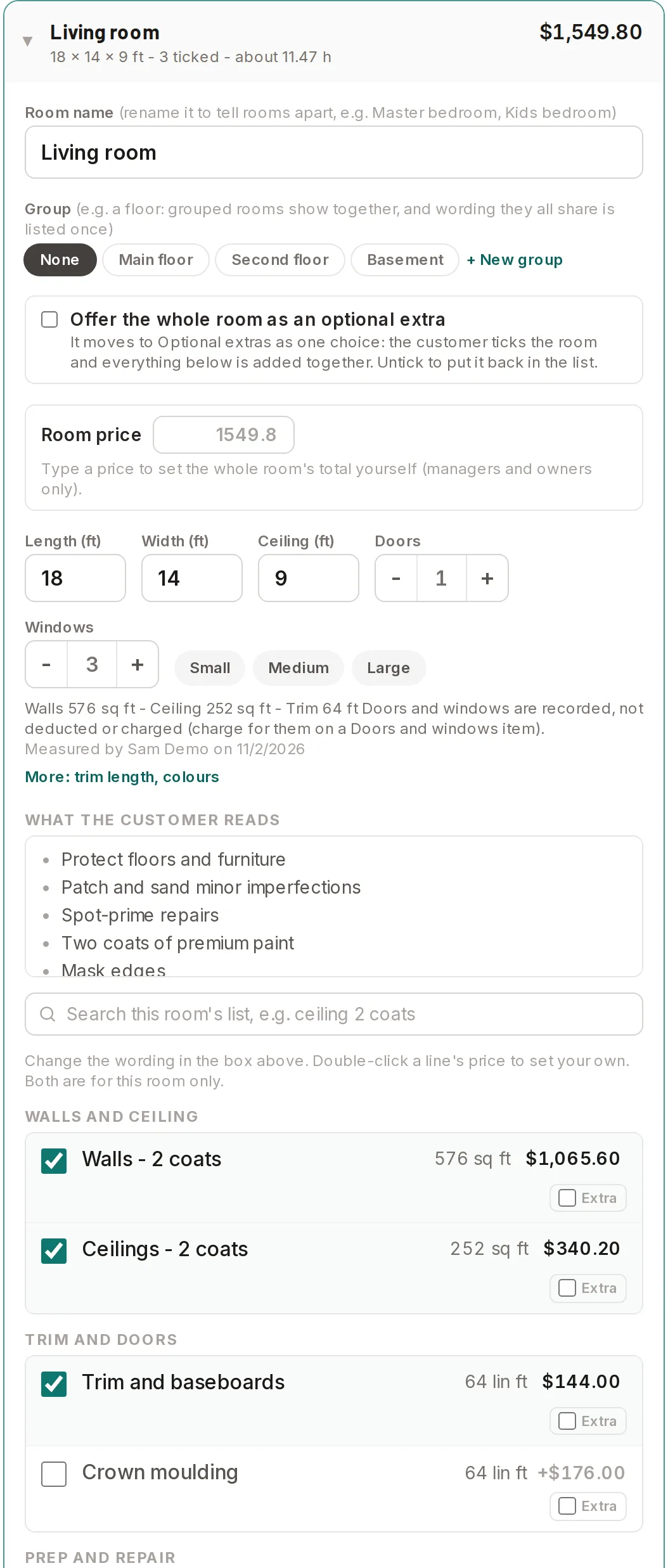
- Wall area = the distance around the room x the ceiling height. For an 18 x 14 ft room with 9 ft ceilings: (18 + 14) x 2 x 9 = 576 sq ft.
- Ceiling area = length x width. 18 x 14 = 252 sq ft.
- Trim and baseboards = the distance around the room. (18 + 14) x 2 = 64 linear ft.
Don't subtract doors and windows from the wall area. Cutting in around them takes as long as painting the wall they replaced, so most painters leave the area as is and charge for doors, frames and windows as their own items when they're being painted.
2. Price each surface from your own rate card
Pricing by the square foot (walls, ceilings) and by the linear foot (trim) keeps quotes consistent between estimators and between jobs. Set the rates once in a price book, then only change them on purpose.
| Surface | Quantity | Example rate | Line total |
|---|---|---|---|
| Walls, 2 coats | 576 sq ft | $1.85 / sq ft | $1,065.60 |
| Ceiling, 2 coats | 252 sq ft | $1.35 / sq ft | $340.20 |
| Trim and baseboards | 64 linear ft | $2.25 / ft | $144.00 |
| Living room total | $1,549.80 |
Extra work gets its own line, ticked only when the job needs it. Don't pad the base rate to cover it:
- Dark-to-light colour changes (an extra coat or a tinted primer).
- Drywall repairs and spot priming, per patch.
- Stain-blocking primer over water marks, smoke or marker.
- Crown moulding, closets, fireplace surrounds and accent walls.
- Moving and protecting furniture when the homeowner won't.
3. Turn the area into labour hours
The price tells you what you'll be paid. The hours tell you what the job will cost. Track how many square feet an average painter covers per hour on walls, ceilings and trim (your production rates), and you can work out how long each quote should take.
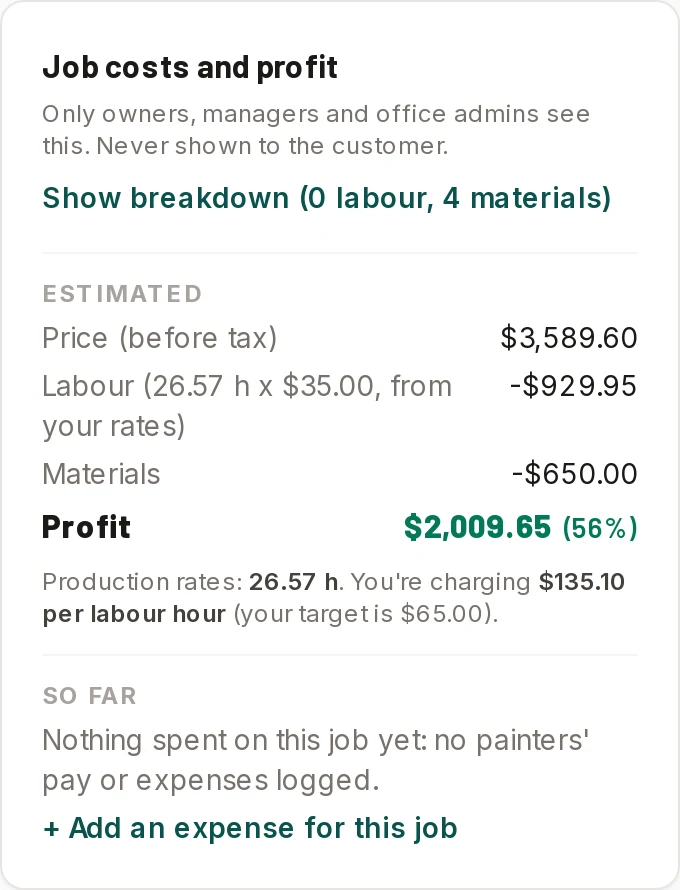
In the example, the three rooms come to about 26.5 painter hours. At $35 an hour in wages, that's about $930 of labour. Add $650 of paint and supplies and the job leaves about $2,010 of profit on a $3,589.60 price before tax, worked out before the quote goes out.
4. Work out the paint
Divide the painted area (each coat counts) by the coverage on the can. Most interior latex covers about 350 to 400 sq ft per gallon per coat on smooth, previously painted drywall, and a second coat over the first goes further, so 400 is a fair planning figure. New drywall, textured ceilings and deep colours cover less.
This is the one place to take the doors and windows out. You still charge for the full wall, but nobody rolls paint over a window. Take off about 20 sq ft per door and 15 sq ft per window.
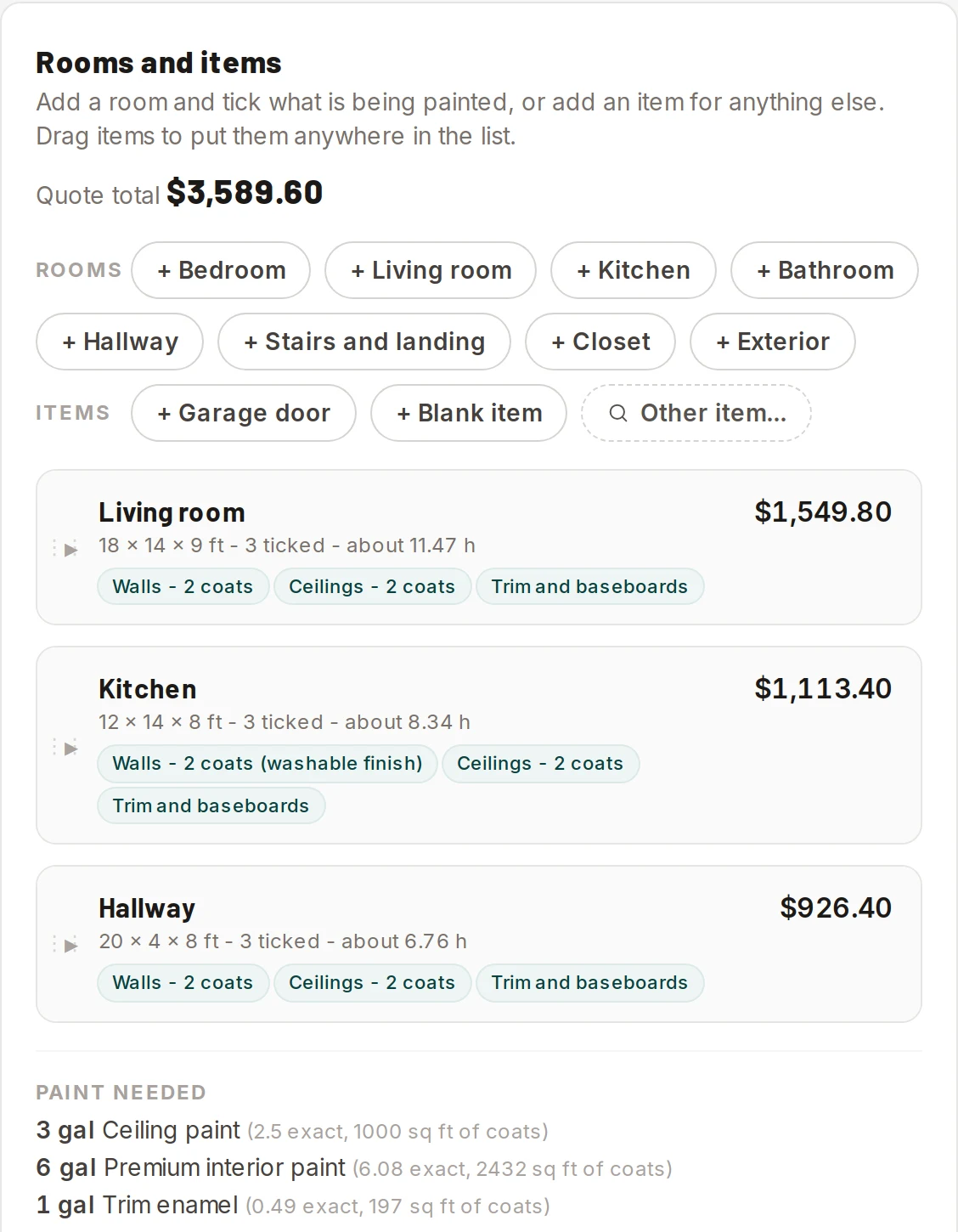
For the three rooms in the example, the walls come to 1,376 sq ft. Less 5 doors and 4 windows, that's 1,216 sq ft, or 2,432 sq ft for two coats: about 6 gallons of wall paint. Round up to whole cans, and put the quantities on the crew sheet so nobody makes a second trip to the store.
5. Add options the customer can say yes to
Leave the base quote lean and add upgrades as optional extras: a closet, crown moulding, the stairwell, a better paint line. Customers like having a choice, and many will add one or two extras on their own.
6. Show the tax on its own line
Homeowners compare totals, so show the price before tax, the tax, and the total on separate lines. In the example the quote is $3,589.60 plus $466.65 HST (13% in Ontario), for $4,056.25. Whatever your sales tax is called where you work, keeping it on its own line makes your price easy to compare. Your accountant can tell you exactly what to charge.
7. If you offer a discount, give it an end date
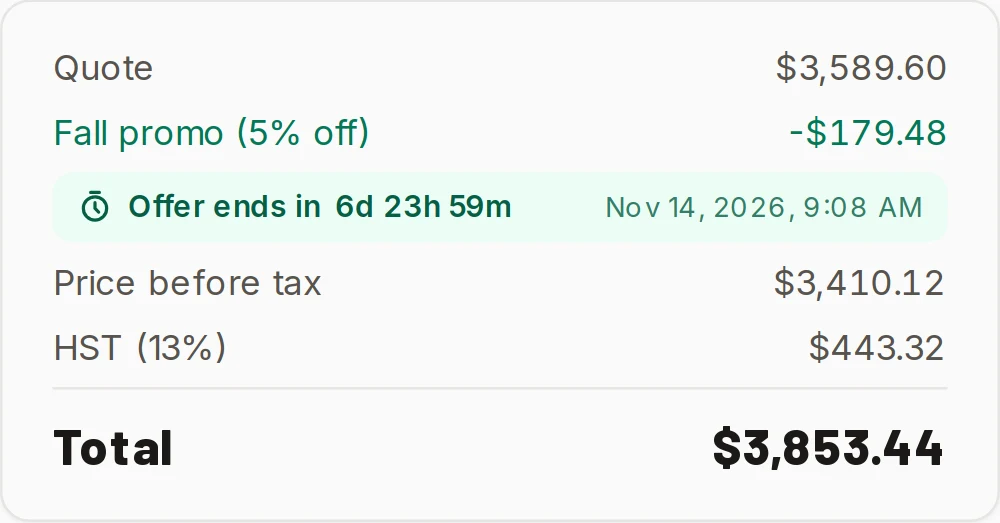
You don't need a discount on every quote. When you do give one, for a fall promo, a returning customer or a slow week, take it off the price before tax and say what it's for, so it doesn't look like the first price was padded. Then give it an end date. An offer that's open forever gives the customer no reason to decide this week.
In SmoothFlo, the Discount box in the estimate's Pricing card takes a dollar amount or a percent, a short reason the customer sees ("Fall promo"), and "Offer ends after" a number of days. The clock starts when you first send the estimate, not when you type it in.
- The customer sees the discount with a live countdown under it: "Offer ends in 3d 4h 12m", ticking down by the second on the last day.
- When time runs out, the discount drops off on its own and the customer sees the full price. If they accept after that, they accept the full price.
- To extend it, raise the number of days and send the update. Leave the days blank for a discount with no end.
8. Send it the same day
Most painting jobs go to the company that answers first with a clear price. A quote that arrives the same evening, looks professional and can be accepted from a phone beats a cheaper one that shows up next week. Then follow up: a few friendly check-ins win more jobs than any discount (see how to follow up on an estimate).
Common pricing mistakes
- Quoting by the room with one flat price. A 10 x 10 bedroom and an 18 x 14 living room are not the same job.
- Forgetting prep. Patching, sanding and caulking can take as long as painting on an older house.
- Not having a minimum job charge. Small jobs still need travel, setup and cleanup.
- Burying extras in the base rate, then losing jobs to quotes that look cheaper.
- Never checking quoted hours against the hours the crew really took.
Questions contractors ask
How much do painters charge per square foot?
It varies a lot by city and by job. For repaints, walls often run somewhere around $1.50 to $3.00 per sq ft of wall area for two coats, with ceilings a little less. Build your own rate from your wages, production rates, paint costs and the profit you need, then check it against jobs you've finished.
Should I deduct windows and doors from the wall area?
Usually not. Cutting in around openings takes about as long as painting the wall, so most painters measure the full wall and price doors, frames and windows separately when they're being painted. For working out the paint, do take them off (about 20 sq ft per door and 15 per window).
Should I quote hourly or by the job?
Homeowners prefer a fixed price. Use hours behind the scenes to check that the price works, and give the customer one clear number per room plus optional extras.
Built for the trades
Do all of this in one place
SmoothFlo handles leads, door knocking, room-by-room estimates, follow-ups, invoices and job profit for contractors. The screenshots in this guide come from it.