Door-to-door canvassing for trades and home service companies
How painters, roofers, landscapers, window cleaners and other trade crews can pick streets, knock at the right times, use a short script, log every door, and turn knocks into booked estimates.
By the SmoothFlo team · Updated November 7, 2026 · 9 min read
For any crew that works on the outside of a house, or comes back on a route, a good canvasser can fill the calendar faster than ads. Homeowners can see the job you're selling, and the best leads are right next door to work you're already doing. Here's how to plan it, track it and get booked estimates out of it, and which trades it works best for.
Where door knocking works best, trade by trade
Knocking works best when the homeowner can see the need from their own front step, or when a neighbour just had the work done. It works for more trades than most people think:
| Trade | Why it works at the door | A good opener |
|---|---|---|
| Exterior painting | Peeling trim and faded siding are easy to spot, and neighbours compare houses. | "We're painting number 22 this week." |
| Roofing | Houses on a street are often the same age, so roofs wear out together. Storms hit whole neighbourhoods at once. | "We're doing your neighbour's roof. Want us to take a look at yours while we're here?" |
| Eavestrough and window cleaning | Quick, repeat jobs. A whole street booked for the same day saves you hours of driving. | A neighbour price when three or more houses on the street book together. |
| Landscaping and lawn care | Every house on a street you already service is almost free to add to the route. | "We already do number 14 every Tuesday." |
| Snow removal | Route density decides your profit, and people sign up before the first snowfall. | Knock in early fall, around houses you already plow. |
| Pressure washing, decks and fences | Grimy siding, grey decks and leaning fences show from the sidewalk, mostly in spring. | Before-and-after photos from a house nearby. |
| HVAC | Subdivisions built together have furnaces and air conditioners of the same age. | A tune-up offer in spring and fall, not a new system on the first visit. |
| Windows, doors and insulation | Older homes on the same street have the same drafty windows and thin attics. | Rebates and energy savings, with a short free check. |
Knocking is harder for work the homeowner can't see from outside, like plumbing and electrical. Even there it can work right after something that hits a whole area, such as a flood, or with a neighbour offer while your crew is already on the street.
1. Pick streets that already need you
- Start around jobs you're doing right now. "We're painting the Tremblays' house this week" is the best opener there is.
- Look for homes from the same era. A subdivision built in the same year needs roofs and exterior paint at the same time.
- Walk past first. Peeling trim, faded siding, curled shingles and old eavestrough tell you which streets to work.
- Hand out one street at a time, or a small area of 80 to 150 doors a person can finish in an evening, so you can come back and see what worked.
2. Knock when people are home
Weekday evenings from about 4 to 8 pm and Saturdays from late morning to mid-afternoon get the most answers. Sunday mornings and dinner time get the fewest answers, and the least patience. Spring and early summer are the best months, because that's when people are thinking about the outside of the house.
3. Keep the script short
You have about ten seconds before the homeowner decides whether to keep talking. Say who you are, why you're on their street, and ask one easy question.
- Ask for the estimate appointment, not the sale. The estimator closes.
- Offer two times instead of asking "when works?".
- Get a name, phone number and the best time to call before you leave.
- Leave something behind at every "not home": a door hanger with your name and number.
4. Log every door, not just the leads
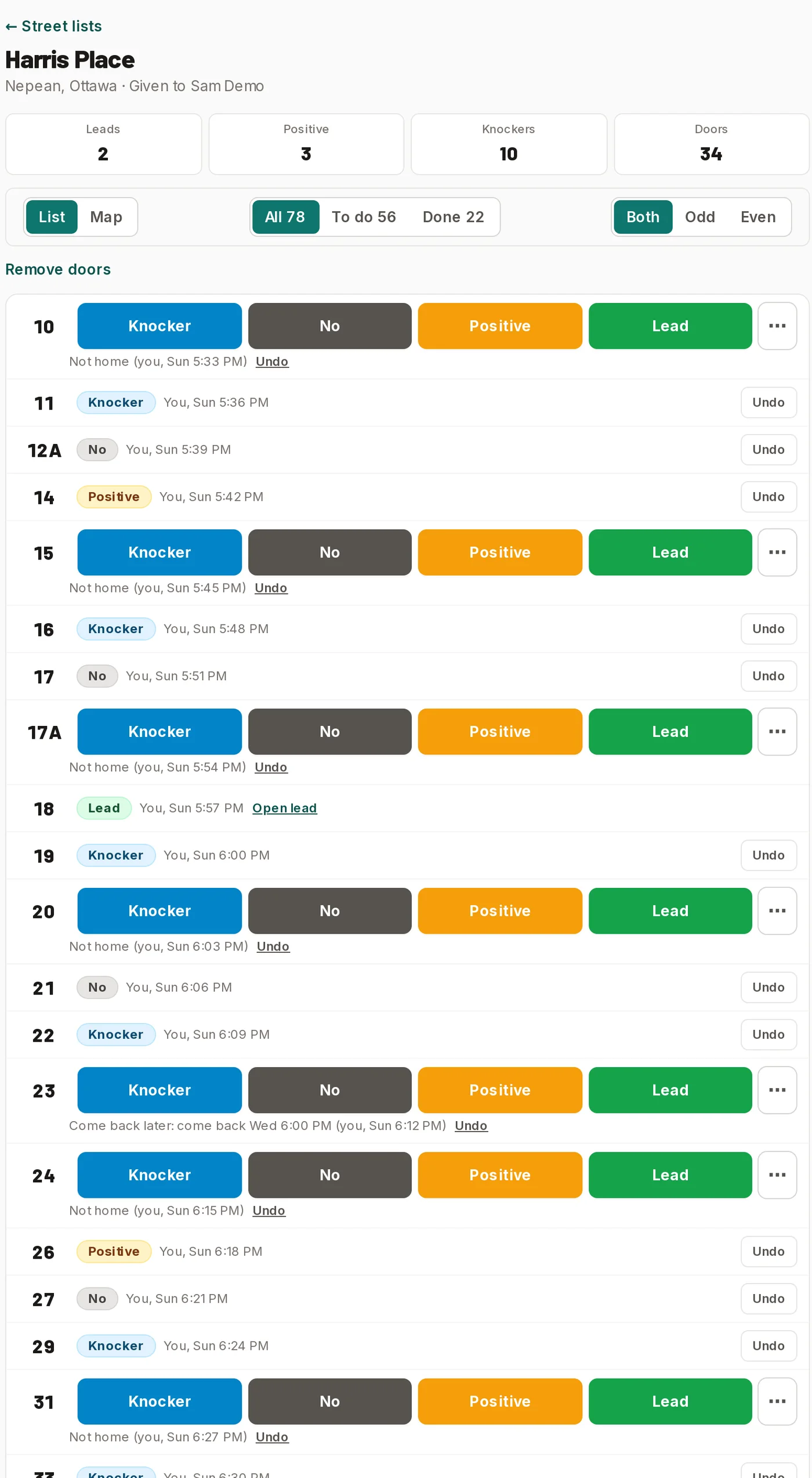
If you only write down the yeses, you can't tell a bad street from a bad night. Log every door with a result: not home, not interested, come back, or lead. That record tells you which streets to re-knock, keeps two people from knocking the same door twice, and shows each canvasser's real numbers.
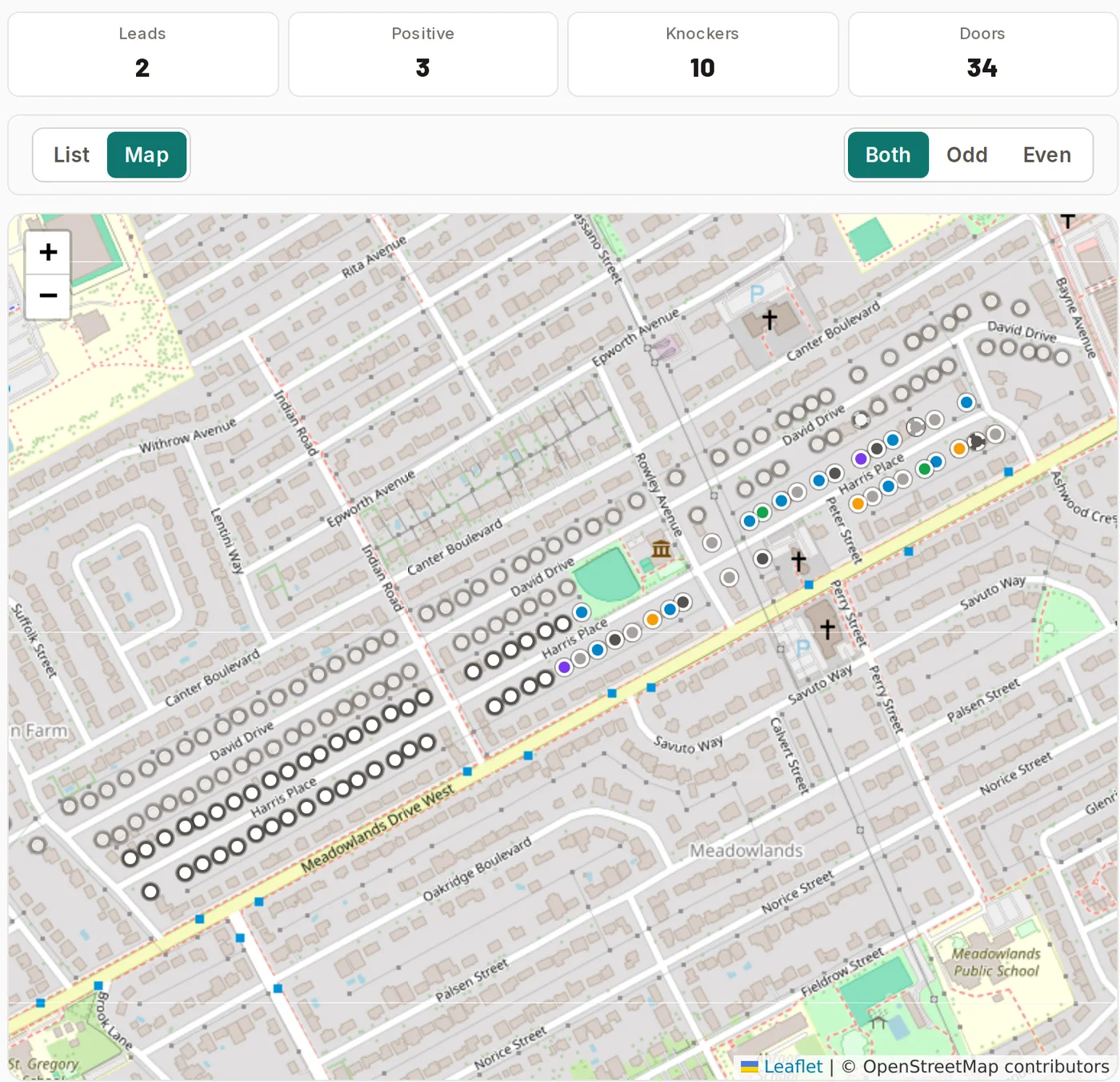
The simplest way to do it is street by street. Give each canvasser a street with every house number on it, and they tap what happened at each door as they walk. Odd numbers up one side, even numbers back down the other. (For other ways to track a team, see tally, territories or street lists.)
5. Know your numbers
Track these each night, per person:
| Number | What it tells you |
|---|---|
| Doors per hour | Effort and pace. A steady canvasser knocks 25 to 40 doors an hour. |
| Answer rate | Whether you're knocking at the right times. |
| Leads per hour | Whether canvassing is paying for itself. |
| Estimates booked from leads | Whether the leads are real or polite. |
| Jobs won from canvassed leads | Whether the street, the season and the pitch are right. |
Pay canvassers a base for their hours plus a bonus per booked estimate or per sold job. A bonus only on sold jobs pays out weeks later and burns people out; a bonus only on leads invites weak ones.
6. Follow up within a day
A doorstep lead goes cold fast. Call or text within 24 hours to confirm the appointment, and re-knock the "come back" and "not home" doors within the week. Most of the value in a territory comes on the second and third pass.
In SmoothFlo there's nothing to copy over. When a canvasser taps Lead at the door and fills in the homeowner's name and number, the lead is already on your pipeline board as a new lead, with the house's address filled in and the canvasser on it. The office can call it the same evening.
7. Be a good neighbour
- Respect "No soliciting" and "No flyers" signs, every time.
- Wear something with your company name and carry business cards, so people know who you are.
- Take a "no" politely and mark the door, so nobody on your team knocks it again this season.
- Some towns have their own rules for door-to-door selling, so check with your city before you send a team out.
A night of canvassing, start to finish
- 1Pick one territory next to a current job.
- 2Brief the team on the script and the job you're pointing to.
- 3Knock from 4:30 to 7:30 pm, logging every door as you go.
- 4Book estimates on the spot when you can, with two time options.
- 5Every lead logged at a door is already on the pipeline board. Call or text each one within a day.
- 6Next morning, review the numbers and pick tomorrow's streets.
Questions contractors ask
Does door knocking still work for contractors?
Yes, especially for visible exterior work like roofing, exterior painting, eavestrough and windows. It works best near jobs you're already doing and when every door is tracked so you can re-knock the right ones.
What is a good conversion rate for door-to-door canvassing?
It depends on the trade and season, but many contractors see roughly one lead for every 30 to 60 doors knocked. Track your own numbers per street and per canvasser, since they vary a lot.
How do I keep canvassers from knocking the same door twice?
Log every door with its result as you go, on a shared map. Everyone on the team sees which doors were already knocked and which ones to come back to.
Built for the trades
Do all of this in one place
SmoothFlo handles leads, door knocking, room-by-room estimates, follow-ups, invoices and job profit for contractors. The screenshots in this guide come from it.