How to follow up on an estimate without being pushy
A simple follow-up rhythm for contractors and home service companies: send the quote fast, check in on day 1, 3 and 9, what to say each time, and when to let it go.
By the SmoothFlo team · Updated November 7, 2026 · 6 min read
When a quote doesn't turn into a job, it's usually not because someone was cheaper. The homeowner gets two or three quotes, gets busy, and books whoever gets back to them at the right time. A short, polite follow-up routine wins a good number of those jobs, and you don't need to be a natural salesperson to do it.
It works the same whether you paint, roof, landscape, install HVAC or clean windows. The examples below come from a painting company; swap in your own trade and the jobs you quote.
1. Send the quote while they still remember you
Following up is easier when the quote arrives the same day as the visit. The homeowner still remembers walking the job with you, and you're often the first price they see. Make it easy to say yes from a phone, because that's where most people open it.
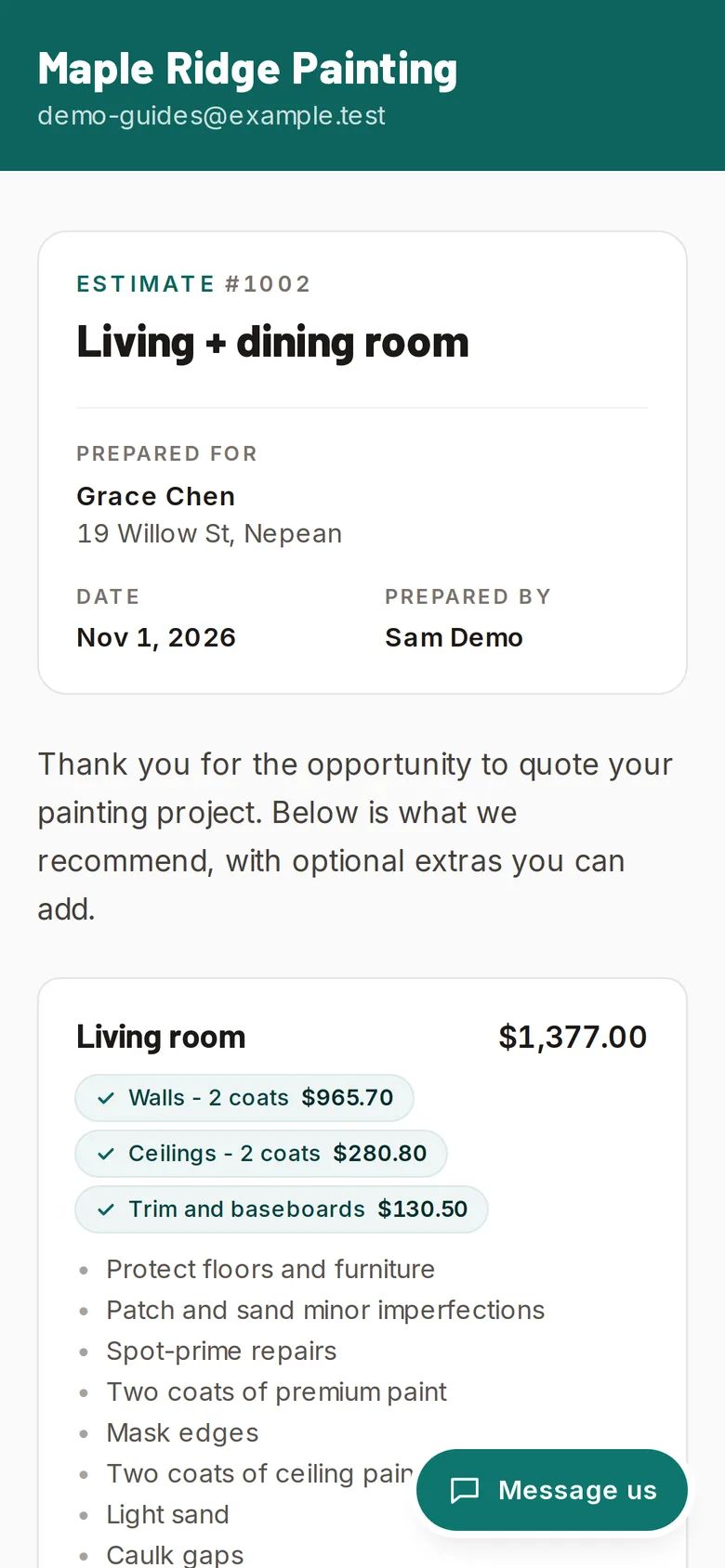
2. Use a fixed rhythm: day 1, day 3, day 9
Pick set days and follow up on every quote, so it doesn't depend on someone remembering. For most residential work, from painting and roofing to landscaping and HVAC, this schedule works well:
| When | What it's for |
|---|---|
| Day 1 after sending | Make sure it arrived and answer quick questions. |
| Day 3 | Help them decide: options, timing, colours. |
| Day 9 | A last, friendly check-in. Then close it out. |
Leave more time between each one. Three messages spread over nine days comes across as helpful, while three in three days feels like pressure.
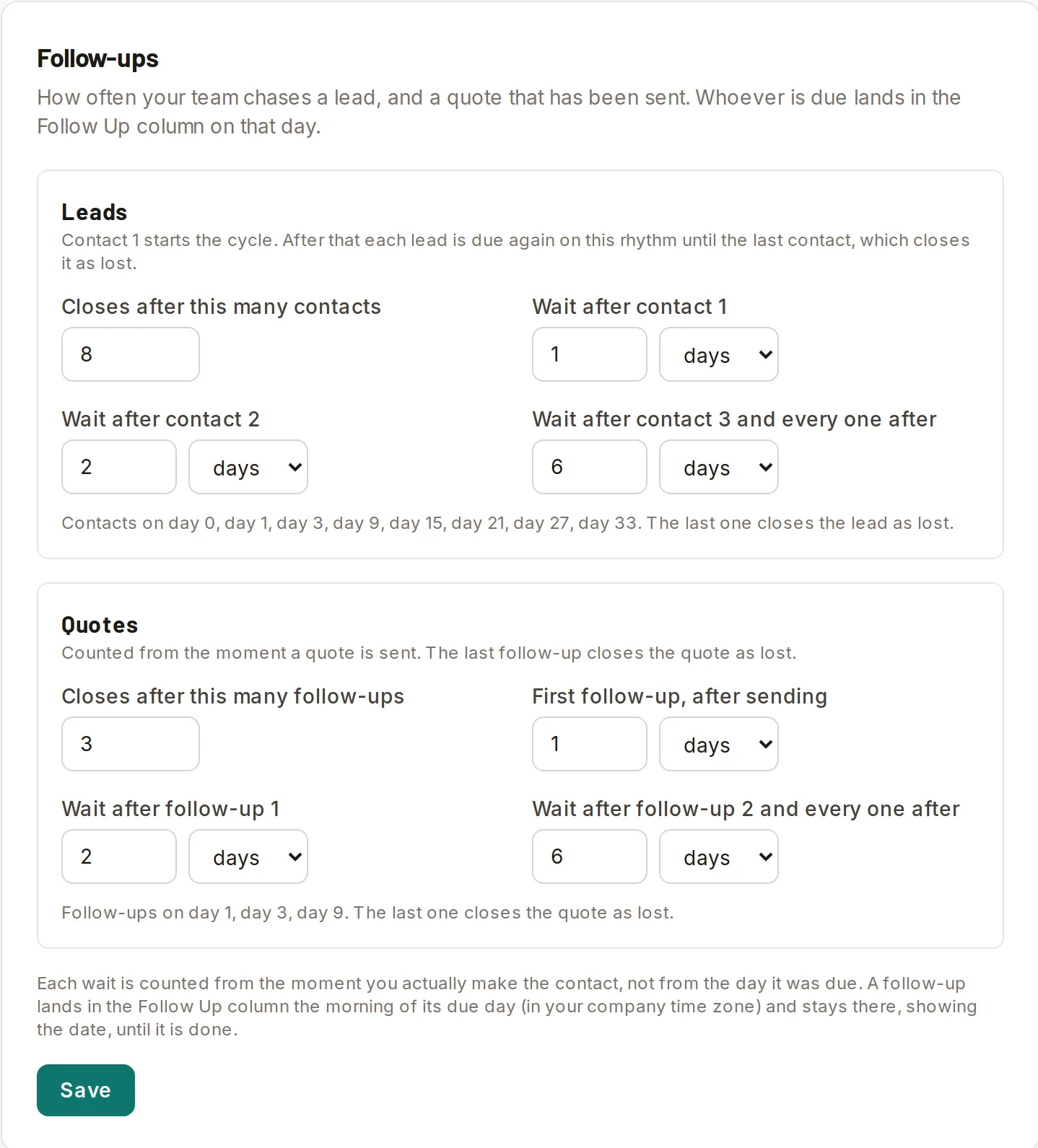
3. What to say each time
Keep every message short, friendly and about them. A text usually gets a faster answer than an email, but use whatever the homeowner used with you.
Day 1: make sure it landed
Day 3: help them decide
Day 9: the last check-in
That last message often gets the most replies. Giving people an easy way out takes the pressure off, and many will answer "actually, let's do it" or tell you what's holding them back.
4. When the answer is "too expensive"
Don't drop your price on the spot. Change the scope instead, so your rates stay the same and the customer still gets a job they can afford:
- Split it into phases: the rooms that matter most now, the rest later.
- Move extras (closets and trim for a painter, gutter guards for a roofer, lighting for a landscaper) into optional add-ons they can tick.
- Offer a standard option alongside the premium one: a standard paint line, a basic shingle, a smaller unit.
- Ask what they were hoping to spend. It's a fair question, and the answer tells you what to send next.
5. Know when they're looking
If you can see when a customer opens the quote, use it. Someone who opened it three times last night is deciding, and that's the moment for a helpful message, not a week later. SmoothFlo shows every time the customer opens the estimate and for how long, so you can time your follow-up.
6. Close it out and come back later
After the last follow-up, mark the quote as lost and note why: price, timing, chose someone else, or no answer. Your pipeline then shows only quotes that are still open, and over time the reasons tell you whether your prices or your speed need work.
A lost quote can still turn into a job. Homeowners who said "not this year" are often the easiest jobs to win next season, and a short message when it starts brings many of them back.
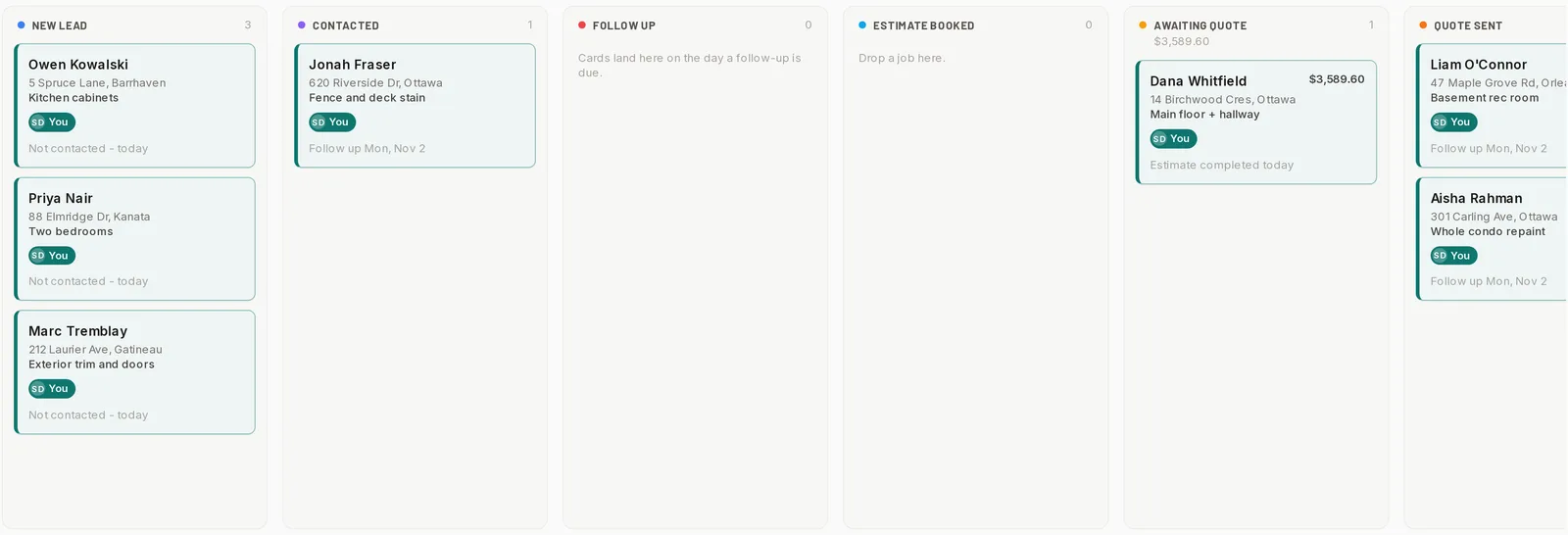
Questions contractors ask
How long should I wait to follow up on an estimate?
About a day after sending it, just to make sure it arrived. Then again around day 3, and a final check-in around day 9. Spacing them out keeps it helpful rather than pushy.
How many times should I follow up on a quote?
Three is a good number for residential work. After the third with no answer, close it as lost and check back next season.
Should I follow up by text or email?
Use whatever the homeowner used with you. Texts usually get faster replies, and email is better for sending a revised quote.
Built for the trades
Do all of this in one place
SmoothFlo handles leads, door knocking, room-by-room estimates, follow-ups, invoices and job profit for contractors. The screenshots in this guide come from it.