How to stay organized as a contractor (when you're running crews, quotes and calls at once)
A practical system for contractors and crew-based businesses: one list for every lead, a pipeline instead of a pile, a schedule the crew can see, paperwork done on the job, and a 15-minute end-of-day routine.
By the SmoothFlo team · Updated November 21, 2026 · 8 min read
Most contractors don't fall behind because they're lazy. They fall behind because the business lives in five places at once: texts, a notebook in the truck, a whiteboard at the shop, a spreadsheet nobody has opened in weeks, and their own head. It works with three jobs a month. It stops working the week you have two crews out, four quotes to send and the phone ringing during a walkthrough.
Staying organized isn't about being a tidy person. It's about having a few simple habits and one place where everything lands. Here's a system that works whether you're on your own with a helper or running several crews.
Signs your system has outgrown you
- You find a voicemail from a customer who called last week, and they've hired someone else.
- Two crews show up at the same house, or none do.
- You can't say which jobs made money last month without digging through receipts.
- Quotes go out days late because you write them at night.
- Your crew texts you the same questions every morning: what's the address, what colour, which rooms.
- Invoices go out late, or not at all, because the job "felt done".
If two or more of these sound familiar, the fix isn't working harder. It's giving every kind of information one home.
1. One list for every lead
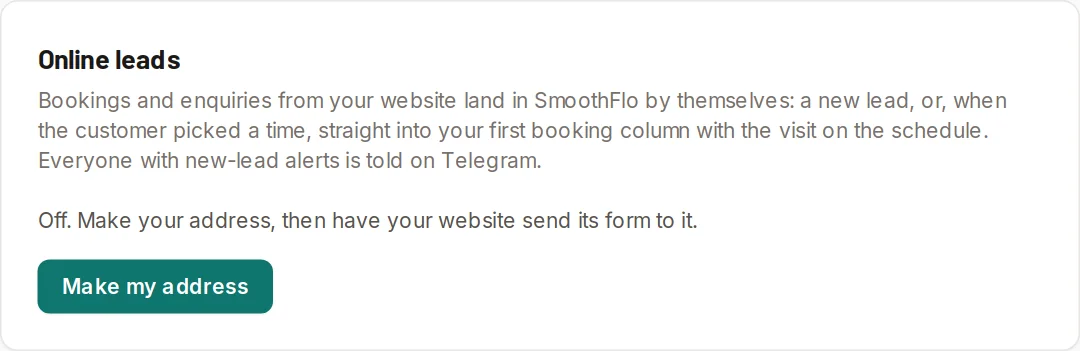
Phone calls, website forms, Facebook messages, door-knocking, referrals from past customers: every new lead should land in the same list, the same day. A lead that only lives in your call history is a lead you'll forget.
Each lead needs three things written down: who they are, what they want, and the next step with a date. "Call Dana back Thursday about the estimate visit" is a next step. "Dana, painting" is not.
2. A pipeline, not a pile
A pile of leads and quotes tells you nothing. A pipeline does. Give every job a stage, and keep the stages simple:
- 1New lead
- 2Estimate visit booked
- 3Quote sent
- 4Quote accepted
- 5Work scheduled
- 6In progress
- 7Done and invoiced
- 8Paid
Now one look tells you where the business is. Ten quotes sitting in "Quote sent" means you need to follow up, not find more leads. An empty "Work scheduled" column three weeks out means it's time to knock doors or call old customers.
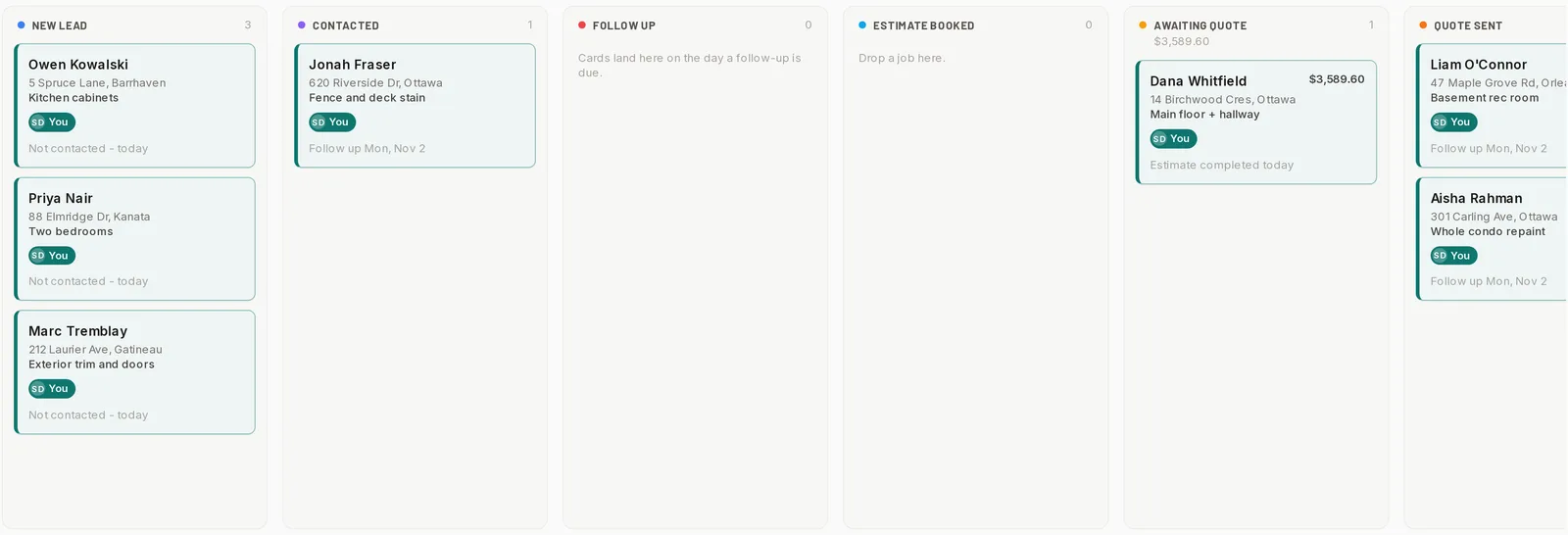
Quotes are where most money gets lost, simply because nobody follows up. A simple rhythm (a day after sending, around day 3, and a last check around day 9) wins jobs you'd otherwise lose. See how to follow up on an estimate without being pushy.
3. A schedule your crew can actually see
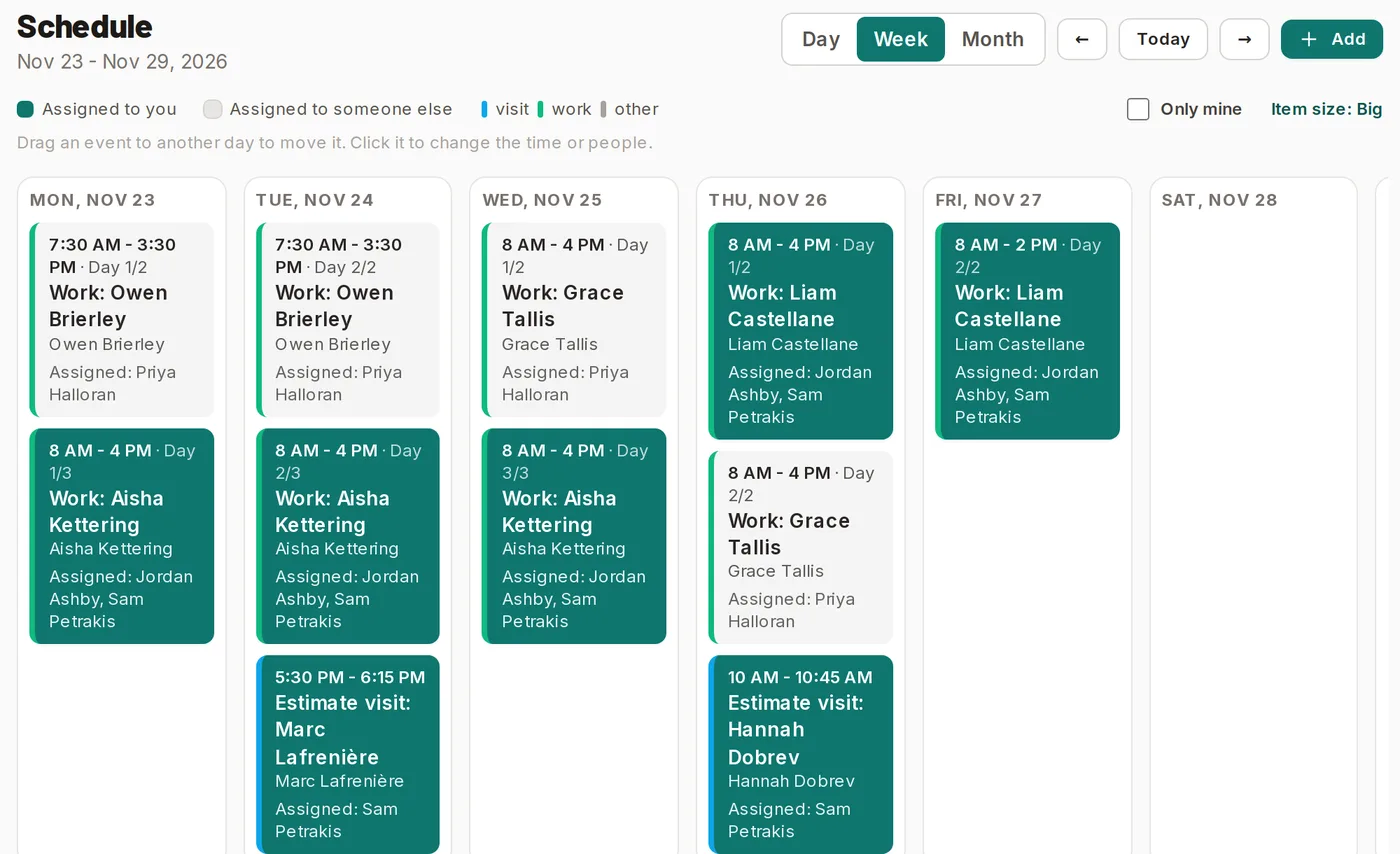
If the schedule lives on the office whiteboard, the crew only knows what you told them yesterday. Put it somewhere everyone can check on their phone: which job, which address, which days, and who's on it.
- Book work by the day, with the crew or people on it, not just "next week sometime".
- Put estimate visits on the same calendar as crew days, so you don't book a visit across town during a job start.
- When a job slips because of rain or a late delivery, move it on the schedule first, then tell the customer. Everyone sees the change at once.
- Leave a little room each week. A schedule packed to the minute breaks on the first rainy day.
4. Job notes the crew reads before they arrive
Most morning phone calls are the same questions: the address, the door code, the colours, which rooms, where to park. Write those down once, on the job, where the crew can read them.
Keep two kinds of notes apart. Office notes (prices, how the customer negotiated, payment details) are for you. Crew notes (gate code, dog in the backyard, colour per room, don't park on the lawn) are for the people doing the work. Mixing them means either the crew sees things they shouldn't, or they don't see what they need.
5. Do the paperwork on the job, not at month-end
Paperwork piles up because it gets saved for later. Do the small pieces while you're standing there:
- Photos before and after, attached to the job, not scattered through your camera roll.
- Receipts photographed at the paint store counter and filed under the job they're for.
- Extra work agreed in writing before it's done. See how to handle extra work with change orders.
- The invoice sent the day the job is done, while the customer is happy and the work is fresh.
6. Hours and costs on every job
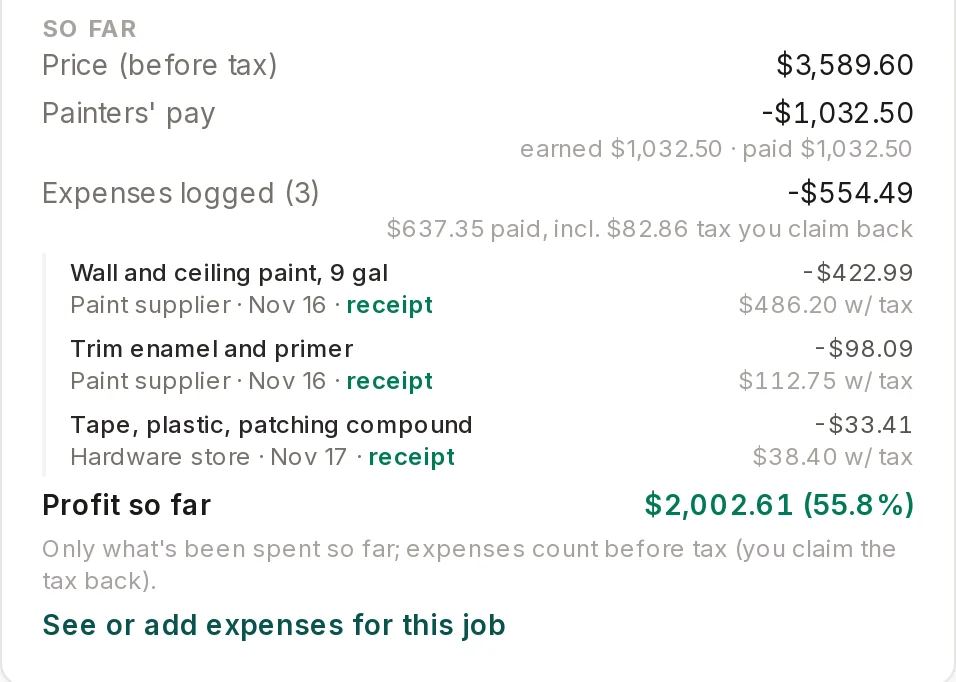
You can't run a crew business on how busy you feel. You need to know what each job cost against what you charged. That takes two things: crew hours logged against the job (a phone time clock beats paper timesheets), and materials logged against the job (that receipt photo from step 5).
After a few months you'll see patterns: which kinds of jobs make money, which estimators price too low, and which customers always add "just one more thing".
7. A 15-minute end-of-day routine
This is the habit that holds everything else together. Same time every day, before dinner, phone or laptop:
- 1Tomorrow's schedule: is every crew booked, does everyone know where they're going, is anything missing (materials, a key, a deposit)?
- 2New leads: is every call, form and message from today in the lead list, with a next step and a date?
- 3Follow-ups due: who needs a call or a message tomorrow? Book them now.
- 4Quotes to send: anything visited this week that still has no quote?
- 5Money: any finished job without an invoice? Any invoice past due?
Fifteen minutes a day is about an hour and fifteen a week. That's far less time than one lost job, one double-booked crew or one forgotten invoice costs you.
For crew-based businesses: the office and the crew need different things
Once you have people working for you, decide who needs to see what. The office needs the whole picture: leads, prices, profit, every job. A crew lead needs their jobs, their days, the addresses and the crew notes. A helper may only need to clock in and see where they're going today.
Giving everyone everything feels simpler, but it isn't. The crew gets buried in prices and leads they don't care about, and private details end up shared further than you meant. Showing each person only their part keeps them focused, and keeps your numbers yours.
How SmoothFlo keeps this in one place
SmoothFlo was built around this exact routine, for a painting company running crews and door-knockers. Leads from calls, your website and Facebook lead ads land in one pipeline. Follow-ups come due by themselves. The schedule shows crew days and estimate visits together, and syncs to everyone's phone calendar. Crew members see the crew notes on their jobs, not your prices or office notes. Time clock hours, expenses and receipt photos add up to a profit figure on every job. You can see the features or start a free trial.
Questions contractors ask
What's the best way for a contractor to stay organized?
Give every kind of information one home: one list for leads, one board for job stages, one schedule the whole crew can see, and notes and receipts filed on the job. Then spend 15 minutes at the end of each day checking tomorrow's schedule, new leads, follow-ups and unpaid invoices.
Do I need software, or is a spreadsheet enough?
A spreadsheet works while it's just you and a few jobs a month. Once you have a crew, several quotes out and work booked weeks ahead, you need something everyone can see and update from their phone. See [moving off spreadsheets](/guides/moving-off-spreadsheets-job-software).
How do I keep my crew organized?
Put the schedule where they can check it on their phones, write job details (address, access, colours, rooms) as crew notes on each job, and have them clock in and out on their phones so hours land against the right job.
How much time should I spend on admin each day?
About 15 minutes at the end of each day, if paperwork like photos, receipts and notes is done on the job as you go. The daily check is what stops admin from piling up into a lost weekend at month-end.
Built for the trades
Do all of this in one place
SmoothFlo handles leads, door knocking, room-by-room estimates, follow-ups, invoices and job profit for contractors. The screenshots in this guide come from it.